
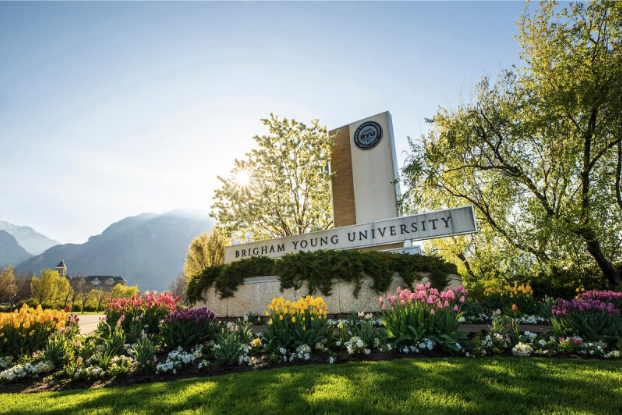
As Brigham Young University approaches its 150th anniversary, it stands as one of the most distinctive institutions in higher education, recognized not only for its academic excellence, but for its unwavering commitment to faith and purpose.
That legacy did not happen by accident. It was shaped, strengthened, and carried forward by leaders who understood that BYU’s mission was different and worth protecting.
In recognition of this milestone, the Utah Valley Chamber is honoring seven BYU presidents at the 2026 Pillar of the Valley event on April 14, 2026. Together, their leadership spans more than five decades of growth, innovation, and influence, guiding the university through periods of transformation while remaining anchored in its founding principles.
Each president brought a unique perspective to the role.
Dallin H. Oaks (1971–1980) helped establish the academic and institutional foundation that continues to define BYU today, including the creation of the J. Reuben Clark Law School and a broader vision of education that develops both intellect and character.
Jeffrey R. Holland (1980–1989) expanded the university’s voice and global reach, strengthening its commitment to both academic excellence and spiritual identity while overseeing landmark initiatives such as the BYU Jerusalem Center.
Rex E. Lee (1989–1995) brought national distinction and principled leadership, reinforcing the integration of faith and scholarship and helping prepare BYU for continued growth into the next century.
Merrill J. Bateman (1996–2003) expanded BYU’s international presence and global engagement, preparing students to lead in an increasingly interconnected world.
Cecil O. Samuelson (2003–2014) provided steady, trusted leadership during a period of expansion, maintaining a strong balance between academic rigor and spiritual purpose.
Kevin J. Worthen (2014–2023) further clarified BYU’s identity in a changing higher education landscape, reinforcing its mission while strengthening its academic standing.
C. Shane Reese (2023–present) now leads the university forward, building on a powerful foundation while guiding BYU into its next chapter.
While each leader’s contributions are distinct, a common thread runs through them all: a commitment to developing individuals who are prepared not only for professional success, but for lives of service, leadership, and purpose.
That impact is evident across Utah Valley and beyond.
Economic analyses conducted over time show that BYU contributes hundreds of millions of dollars annually to Utah County, supports more than 15,000 jobs, and plays a central role in the region’s workforce and long-term economic growth. Its graduates go on to lead businesses, strengthen communities, and contribute globally, carrying with them the values instilled during their time at the university.
Yet BYU’s influence cannot be measured by numbers alone.
Its true impact lies in the integration of faith and learning. This model continues to shape not only what students know, but who they become.
On April 14, 2026, these seven presidents will be honored together at the Pillar of the Valley event, an uncommon gathering that reflects both the history and the future of Brigham Young University.
As BYU celebrates 150 years, this moment offers an opportunity to recognize the leaders who have shaped its path, and to consider the continued influence of an institution committed to both excellence and purpose.