
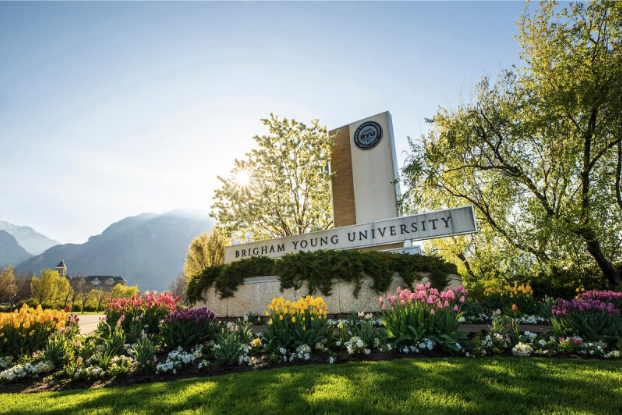
As Brigham Young University approaches its 150th anniversary, the Utah Valley Chamber is honoring the leaders whose vision and sacrifice have shaped the university’s enduring legacy.
In the weeks leading up to the April 14 Pillar of the Valley event, we are highlighting one president at a time, reflecting on the defining moments of their leadership and the lasting impact they continue to have on BYU and beyond.
We conclude this series with President Dallin H. Oaks, who served as BYU’s eighth president from 1971 to 1980. His leadership helped define the modern trajectory of the university, strengthening both its academic foundation and its spiritual mission during a pivotal period of growth.
A Foundation of Leadership and Sacrifice
From an early age, President Oaks demonstrated a capacity for leadership shaped by responsibility and resilience. After the passing of his father when he was just seven years old, he began working at a young age to support his family. This experience would influence his lifelong commitment to discipline, service, and purpose.
That same sense of duty carried through his academic and professional life. After graduating from BYU, he earned his law degree from the University of Chicago and went on to clerk for Chief Justice Earl Warren of the United States Supreme Court. He later built a distinguished legal career before answering the call to return to Utah and serve as president of BYU.
Strengthening BYU’s Academic and Institutional Foundation
President Oaks’ tenure marked a period of significant institutional development.
He led the establishment of the J. Reuben Clark Law School, helping position it as a nationally respected program. He also laid the groundwork for what would become the Marriott School of Business, expanding opportunities for students in business and management education.
Beyond new programs, President Oaks strengthened the university’s academic culture, supporting faculty, encouraging intellectual rigor, and reinforcing BYU’s commitment to excellence in both teaching and scholarship.
At the same time, he worked to ensure that opportunities at BYU were equitable and accessible, advocating for the advancement and inclusion of women across campus.
A Broader Vision of Education
President Oaks believed that education should extend far beyond professional preparation. In a 1974 devotional, he taught:
“Education is more than vocational. Education should improve our minds, strengthen our bodies, heighten our cultural awareness, and increase our spirituality. It should prepare us for greater service to the human family.”
This vision continues to define BYU today, an institution committed to developing the whole person, intellectually and spiritually.
Leadership Beyond BYU
Following his presidency, President Oaks continued his distinguished career in public service as a justice on the Utah Supreme Court.
In 1984, he was called as a member of the Quorum of the Twelve Apostles of The Church of Jesus Christ of Latter-day Saints. He later served in the First Presidency from 2018 to 2025 and, in October 2025, became the 18th President of the Church.
A Lasting Impact
President Dallin H. Oaks’ influence is evident not only in the programs and institutions he helped establish, but in the enduring principles he championed: faith, discipline, intellectual rigor, and service.
His leadership helped shape BYU into the institution it is today, laying a foundation that continues to guide its growth and mission.
Honoring a Legacy of Leadership
On April 14, 2026, President Oaks will be honored alongside six other BYU presidents at the Utah Valley Chamber’s Pillar of the Valley event. Together, these seven presidents represent more than five decades of leadership that has shaped Brigham Young University’s legacy and future.
As the final installment in this series, we invite you to explore the full story of BYU’s leadership legacy across all seven presidents.