
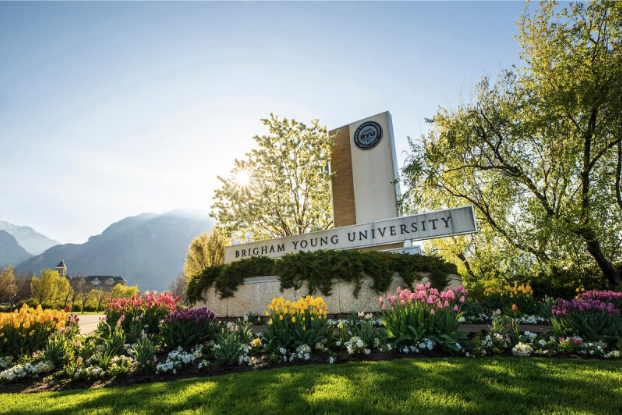
As Brigham Young University commemorates 150 years, the Utah Valley Chamber is honoring the presidents whose leadership has shaped the university’s academic excellence, spiritual foundation, and global influence.
In the weeks leading up to the April 14 Pillar of the Valley celebration, we are spotlighting one president each week, reflecting on the defining moments of their tenure and the enduring legacy they leave at BYU.
We now turn to President Merrill J. Bateman, who served from 1996 to 2003, leading the university during a period of expanding global reach and growing academic distinction.
Expanding BYU’s Global Influence
President Bateman’s tenure came at a time when the world was becoming increasingly interconnected. With a background in economics and international development, he brought a global perspective to BYU’s mission, helping position the university as a place where students could prepare not only for local impact, but for meaningful contributions around the world.
During his presidency, BYU continued to strengthen its international programs, broaden its academic offerings, and deepen its reputation as a university capable of competing on a global stage, all while remaining anchored in its faith-based identity.
That balance, global relevance grounded in spiritual purpose, remains a defining characteristic of BYU today.
Strengthening Academic and Spiritual Foundations
While expanding the university’s global footprint, President Bateman also reinforced the core principles that have long defined BYU. His leadership emphasized the integration of faith and learning, ensuring that intellectual growth remained closely connected to spiritual development.
At a time of increasing change in higher education, this clarity of mission helped BYU maintain its distinct identity. Students were not only challenged academically, but also encouraged to develop character, discipline, and a sense of responsibility that would guide them long after graduation.
That dual focus continues to shape the BYU experience.
Leadership Through a Time of Growth
The late 1990s and early 2000s were a period of meaningful growth for both BYU and Utah County. As the region began to expand economically, the university played a central role in preparing students to contribute to that momentum.
President Bateman’s leadership helped strengthen BYU’s role as a talent pipeline, producing graduates equipped with both the skills and values needed to lead in business, education, public service, and beyond.
Many of those graduates continue to influence Utah’s economy and communities today, reflecting the long-term impact of leadership decisions made during that era.
A Lasting Legacy
Every BYU president leaves an imprint on the university’s trajectory. President Bateman’s legacy is one of thoughtful expansion, broadening BYU’s reach while preserving the principles that make it unique.
As the university marks its 150th anniversary, his contributions serve as a reminder that growth and faith are not opposing forces, but can move forward together when guided by clear purpose.
Honoring a Generation of Leadership
On April 14, 2026, President Bateman will be honored alongside six other BYU presidents at the Utah Valley Chamber’s Pillar of the Valley event. Together, their leadership spans more than five decades, a period that has shaped BYU into the institution it is today.
This gathering offers a unique opportunity to recognize the individuals who have guided BYU through seasons of transformation while remaining grounded in its founding mission.
As we reflect on 150 years of Brigham Young University, we also recognize the leaders who helped carry that mission forward, ensuring its impact continues for generations to come.
We invite you to learn more about the Pillar of the Valley celebration and join us on April 14 as we honor this legacy of leadership.